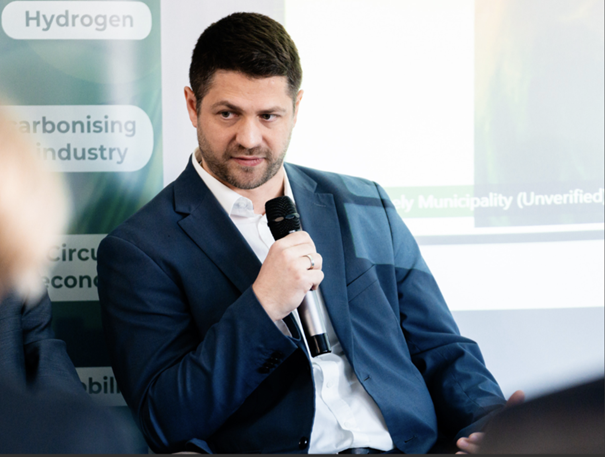
Interview with Dávid Varga, CEO & Co-Founder, realCity ITS Kft.
The question of measurability inevitably arises. Can it be demonstrated with data that your developments have improved transportation in a given city or within a definite transport service segment? How do you see, how strong is the demand for monitoring the impacts of the projects?
The impact of these systems can be measured to some extent, but it is rarely as straightforward as linking a single development to an overall improvement in public transport quality. Transport performance depends on many factors (e.g. network design, infrastructure, vehicle availability) so IT systems are only one part of the picture.
There are, of course, clear, observable effects. From the passenger perspective, reliable real-time information increases trust in the system. If users can see when a vehicle is expected to arrive, they are generally more tolerant of delays and with a sophisticated journey planner can adapt more easily, especially on unfamiliar routes. For operators, having a clearer view of what is happening in real time allows for more proactive decision-making, rather than reacting only after issues occur. This typically leads to more efficient operations and, in some cases, reduced need for manual intervention. Drivers also benefit from continuous guidance, map-based navigation and feedback, which helps them follow schedules more consistently. At the same time, these improvements are usually measured through a combination of operational indicators, such as punctuality, adherence to schedules, or system usage, rather than a single metric.
There is a growing demand for monitoring and data-driven validation, especially in larger or publicly funded projects. However, in practice, the level of measurement varies, and the value of these systems is often best understood as part of a broader improvement in how transport services are managed and experienced.
How difficult is it to integrate your modern IT solutions into existing systems?
It varies from case to case. We have worked with systems that are 15–20 years old, where understanding the existing setup was quite a challenge. At the same time, there are established data standards that many legacy systems usually follow at least on an output level, which makes integration technically possible in most situations.
In our experience, if there is alignment and willingness from all parties, the technical challenges can usually be managed. The bigger difficulty is often not the technology itself, but coordination and priorities across the different stakeholders.
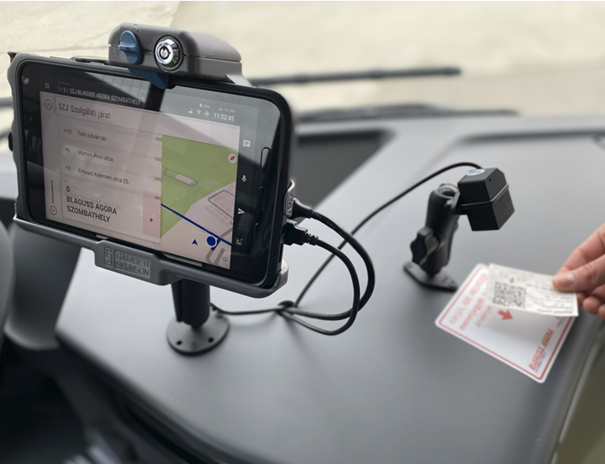
(Szombathely, Hub for Exchange and Intermodal Connections)
Staying at home: in 2025 you successfully applied to the EIT Urban Mobility Main Innovation Open Call with your Impulse+ project, and since then you have implemented the project. Could you share some information?
The IMPULSE project was our first participation in an EIT Urban Mobility Main Innovation Call, focusing on supporting electric bus operations with data-driven tools. The main goal was to collect and process real-time data, such as battery status and energy consumption, and use this to provide operational insights, especially around range prediction and daily planning.
The project was implemented with pilot locations in Lisbon and Istanbul, each with different technical environments. This allowed us to validate the solution in both API-based and more constrained, manually integrated setups. Beyond the technical side, the project also required close collaboration within an international consortium and a strong focus on documentation and communication.
Based on the results, we were invited to continue in a Fast Track project (IMPULSE+), which allowed us to further develop the solution with a smaller consortium and reduced administrative requirements. In this phase, we extended the system with additional vehicle types, charger integration, and further functional improvements.
We are happy to say that as of last week, both projects have now been successfully completed with the highest available rating from EIT Urban Mobility.
In this context, a question we asked another interviewee came in my mind (with László Mátyus, Debrecen Transport Company). A significant part of international projects are pilots. PTOs and municipalities are often reluctant to pilots, saying that “real” projects are needed. What is the chance that your Impulse+ development will evolve into a large-scale project? After all, it addresses a very important issue. How do you see the added value of pilots in addressing urban transport challenges?
We understand this concern, but in our experience, it is often based on a misunderstanding of what a well-designed pilot can offer. For cities and operators, pilots provide a relatively low-risk way to test new solutions in a real, familiar operational environment. While they do require some internal effort, those are often supported by external funding, allowing cities to evaluate multiple approaches without long procurement processes. This is particularly important because cities are often hesitant to adopt new systems without prior experience, as long-term contracts can be difficult to reverse if the solution does not meet expectations. A pilot helps reduce this uncertainty by providing hands-on experience with the system in real conditions.
If the pilot is successful, it also creates a strong foundation for further deployment. The system is already partially integrated, users are familiar with it, and the implementation risks are lower. This can significantly reduce the cost and effort of a full rollout, and it also creates a more balanced position for negotiations between the city and the supplier.
In the case of IMPULSE, we see realistic potential for further expansion, especially as electric fleet management is becoming an increasingly relevant challenge for operators. In Lisbon, for example, the system is already in place, we have maintained a strong working relationship with the operator, and we see a realistic path towards a future procurement.
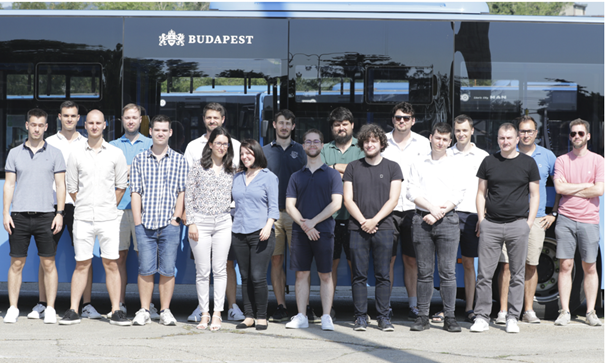
(The realCity Team)
And finally, returning to your company: to what extent is the company pathway align with your original founding concept? Did you have to change direction significantly over the years?
Our current direction is quite the same as what we originally had in mind. From the beginning, we aimed to build a smaller, focused team supported by strong technology and a high level of automation, and to cover a well-defined part of the mobility IT domain. The path itself was not fully predefined. Over the years, we adapted to different projects and situations, but these were incremental changes rather than major pivots. The core idea has remained consistent.
As a small example: in the past, we had some attempts to take on more hardware-related tasks, but over time it became clear that our strength lies in software. Today, we prefer to work with partners on the hardware side and focus on what we do best.
At this stage, our main focus is on further developing our existing products and increasing the level of automation. This allows us to scale our solutions while keeping the team relatively compact.
Do you see the international markets realistic as further growth? With the Impulse+ project you have already entered the space of international collaborations.
Yes, but we see it as a gradual process rather than a rapid expansion. Entering international markets is not only about having the right technology, but also about building the right partnerships and understanding local conditions.
Projects like IMPULSE and IMPULSE+ have been important in this respect. They gave us the opportunity to work in different environments, build relationships, and gain references outside our home market. These are essential when approaching new cities or operators.
At the same time, we do not expect international growth to come from large, immediate deployments. It is more likely to start with smaller projects, pilots, or collaborations, and then expand step by step if the conditions are right.
For us, the focus is on sustainable growth—entering markets where our solutions can bring real value, we can gain references of successful projects and where we can build long-term partnerships.
Where do you see your role within 10 years, in a hopefully sustainable and human-centred transport ecosystem?
In 10 years, we see our role as a technology partner that helps make transport systems more predictable and easier to operate, rather than trying to cover every aspect of mobility. Public transport will likely become more complex, especially with electrification and the growing need for multimodal (including carsharing, micromobility, etc.) integration, and this will increase the importance of reliable, well-structured data.
Our focus will remain on turning this data into practical tools that support daily operations and provide clear, usable information for passengers. If done well, this can contribute to a more transparent and user-friendly system, where both operators and passengers can make better decisions.
At the same time, we expect to stay a relatively compact team, relying on strong technology and automation to scale our impact. For us, success is not necessarily about size, but about building solutions that are widely used and have a measurable effect on how public transport is perceived as a better alternative to individual travel.