
Interview with Ákos Dervalics, CEO of Green Brother and business development expert
Scaling internationally is more than entering a market
Entering a new country can look deceptively simple. Translate the website, prepare an English presentation, identify a few prospective customers and start arranging meetings. Yet being present in a market is not the same as being accepted by it.
This is particularly true in B2B markets, where purchasing decisions involve technical, financial, operational and reputational risks. Customers are not only evaluating the product. They are also asking whether the company understands their situation, can be trusted to deliver and will still be available when support is needed. Local language plays an important role in answering these questions. It helps companies move beyond presenting their solution and begin building genuine relationships.
We spoke with Ákos Dervalics, CEO of Green Brother, about why local-language communication matters and how a trusted local expert can make international market entry more effective.
Why is trust so important when entering a new B2B market?
In B2B sales, customers are rarely buying only a product. They are also accepting financial, operational and sometimes personal risk. If the project goes wrong, someone within the organisation may need to explain why that particular supplier was selected. This is why even an excellent solution does not sell itself. Customers need to trust the company behind it, the people representing it and the promises being made.
Trust also develops outside formal sales meetings. Unofficial discussions are often just as important as presentations or proposals. A conversation over coffee or lunch can help us understand the client’s background, internal priorities, previous experiences and concerns. These non-sales discussions are essential to successful sales. When people do not feel that every sentence is leading towards a sales pitch, they tend to speak more openly. That is often when we learn what the real challenge is, who needs to be convinced and what may prevent the project from moving forward.
How is trust built in a B2B relationship?
Trust is usually built through many small actions rather than one impressive presentation. It comes from listening carefully, following up when promised, being transparent about limitations and demonstrating that you understand the customer’s business. Local references and credible introductions can help, but consistency is what makes the relationship last. If you promise to send information on Tuesday, send it on Tuesday. If something is not possible, say so clearly. Customers generally appreciate an honest answer more than an ambitious promise that later needs to be withdrawn.
Trust also grows when the supplier understands the wider context. What are the customer’s strategic priorities? How does the procurement process work? Who will use the solution in practice? What concerns might the technical, financial or legal teams have? In other words, successful business development is not only about talking well. It is about paying attention.
If both sides speak English, why is local language still important?
A shared foreign language makes communication possible, but it does not automatically make communication complete. People may speak excellent English and still prefer discussing sensitive or complex issues in their native language. It is easier to express uncertainty, challenge an assumption or explain an internal problem when you do not also need to search for the right words.
A simple example is a meeting where both parties agree that a project timeline is “quite ambitious.” The international supplier may understand this as: “The schedule is challenging, but achievable.” The local customer may actually mean: “We do not believe this deadline is realistic, but we do not want to reject it directly during the meeting.” The words are understood, but the real message is missed. A local expert can recognise this difference, ask the right follow-up question and prevent a polite misunderstanding from becoming a project problem.
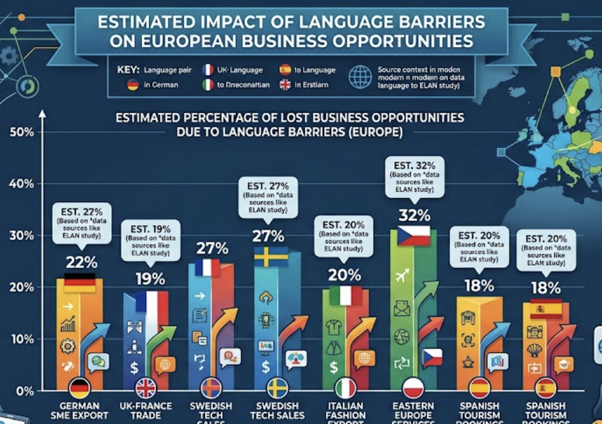
What are the hidden commercial costs of a language gap?
The most visible consequence is usually a longer sales process, but there are several less obvious costs. Requirements may be misunderstood, proposals may focus on the wrong benefits and important stakeholders may remain only partly engaged.
One major risk is that objections stay hidden. When a sales process takes place in a foreign language, stakeholders may not feel comfortable raising concerns. They may understand the presentation but remain silent because explaining a technical, financial or organisational objection in English feels difficult.
The sales team may interpret this silence as agreement. In reality, the stakeholder may still be unconvinced and later block the decision internally. This is especially important when dealing with municipalities, utilities, industrial companies or other organisations where many departments participate in the decision. The main contact may speak fluent English, while the operational, legal or procurement teams prefer the local language. If these people cannot participate fully, the supplier may never hear the objections that actually decide the outcome.
Is translating sales material enough to solve the problem?
Translation is useful, but it is only the starting point. A translated brochure can explain what the solution does. Localisation explains why it matters in that particular market.
The same technology may solve different priority problems in different countries. One market may focus on cost reduction, another on regulatory compliance and another on resilience or sustainability. Using the same value proposition everywhere, just in different languages, will therefore have limited results.
Terminology also matters. Customers expect companies to understand local regulation, procurement practices, market structures and industry language. A technically correct translation can still sound unfamiliar or overly generic.
Good localisation adapts the examples, references, tone and value proposition. The objective is not simply to make the material readable. It is to make it relevant.
How can a local expert bridge the language and trust gap?
A good local expert does much more than interpret meetings. The role is to translate business intent, market expectations and sometimes even what has not been said directly. Before a meeting, the expert can help the company understand the prospective customer, identify the relevant decision-makers and adapt the value proposition. During the discussion, the expert can recognise uncertainty, cultural signals and unspoken objections. Afterwards, they can follow up in the customer’s preferred language and keep the conversation moving.
The local expert can also explain the market to the international company. They can say: “This reference will be important,” “This part of the proposal needs more detail,” or “Before discussing a pilot, we need to involve the operational team.”
This works in both directions. The customer gains a reliable local contact, while the international company gains a clearer view of what is really happening in the sales process.
Can a local expert transfer trust to a new market entrant?
To some extent, yes. A recommendation from a respected local organisation or expert reduces the customer’s perceived risk. It signals that someone familiar with the market has reviewed the company and believes the conversation is worth having.A trusted introduction can open the door, but it cannot carry the company forever. The international supplier must build its own credibility through its behaviour, expertise and delivery.
We see the local expert as a bridge. A bridge helps the company cross into the market, but the company still has to continue the journey. The strongest results come when the local partner provides access and context while the international company remains actively involved and responsive. Trust can be introduced, but it must ultimately be earned.
What mistakes do companies commonly make when entering a new market?
A common mistake is assuming that an English-speaking contact can represent the entire customer organisation. That person may be enthusiastic about the solution, but the final decision may depend on colleagues in procurement, finance, legal or operations who have not been involved properly.
For example, a technology company may conduct several successful English-language meetings with an innovation manager. The manager understands the benefits and wants to launch a pilot. However, the operational team receives only an English technical document, the procurement team does not understand the proposed commercial model and management has not seen a locally relevant business case. The project then appears to stop without a clear reason. The problem is not necessarily the solution. The company simply reached one internal supporter but did not build trust across the wider organisation.
Other mistakes include directly translating home-market materials, using unfamiliar references, expecting a distributor to develop the entire market alone and involving local expertise only after the sales process has already stalled.
What is Green Brother’s best practice for language-led market entry?
Our approach is practical. We begin by understanding the market, the customer and the decision-making environment before pushing a solution.
First, we identify the relevant stakeholders and validate whether the proposed value proposition matches local priorities. We then adapt the key messages, examples and materials—not necessarily every document, but everything the customer needs to understand the opportunity and make a decision.
Next, we use credible local introductions to start the conversation. We support discovery meetings in the local language, paying particular attention to the customer’s situation, concerns and internal processes. We involve technical, operational and commercial stakeholders early enough for them to ask questions and raise objections.
After each discussion, we make sure that the next steps are clear. We follow up in the language that is most comfortable for the stakeholders and help the international company respond in a locally relevant way.
Throughout this process, Green Brother acts as a bridge, not a substitute for the company. We help build the relationship, interpret the market and create trust, while ensuring that the solution provider remains visible and accountable. It is a natural way of working for us because successful market entry has always depended on combining international opportunities with strong local relationships.